

How we sold the finished ear, not just another earring, for Black Friday.
The challenge
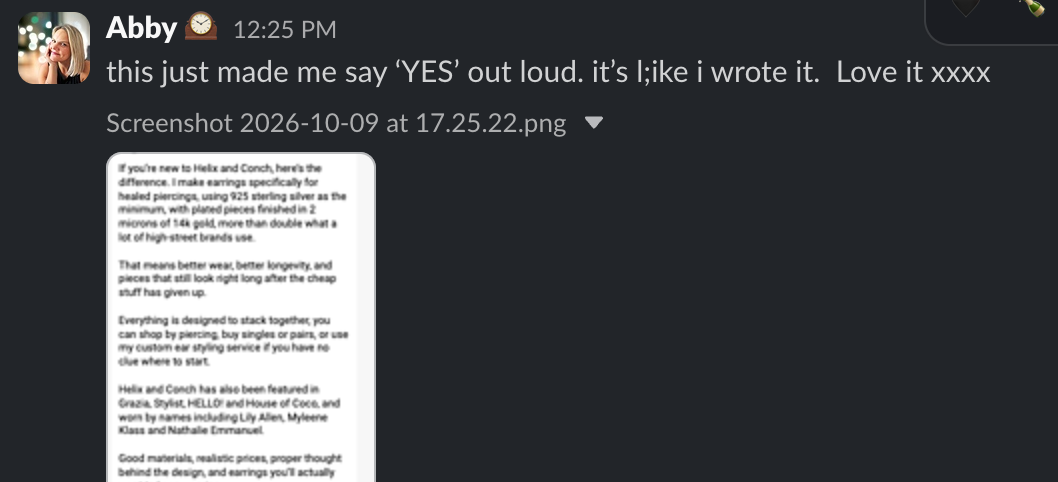
Helix & Conch could no longer sell the same solid-gold range after gold prices rose. The ads didn’t help people see what they could still buy: generic copy and awkward crops made it hard to tell how a hoop would fit or what would sit next to it.
The typical basket was £57.68 and acquisition cost was about £30 to £35. But historical lifetime revenue averaged £102.87 per customer, and 27% bought again. That was a reason to make it easier for someone to build a stack and come back for the next piece.
What I changed
Show the finished ear. We styled real pieces together. Buyers could build their own stack with eligible pieces or buy a ready-made set without figuring out what went where.
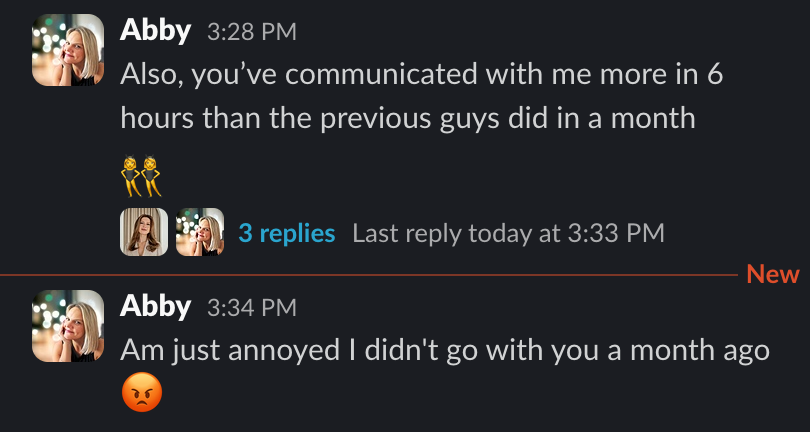
Give the next piece a reason to be in the basket. We offered 15% off at £75, 20% at £100 and 30% at £140, and kept already-discounted sets separate. Abby saw two orders for ready-made sets even though those buyers could have bought the pieces individually for less. The styling did some of the selling.
Give early access its own job. It brought in 201 leads at £0.94 each. We used the strongest organic posts to support cold discovery, then kept conversion spend with warmer audiences.
The results
Meta attributed £1,949.65 in purchase value on £544.21 of Black Friday campaign spend (22 purchases, 3.58× ROAS). Dynamic retargeting reported £3,278.10 on £542.55 (36 purchases, 6.04× ROAS).
On Shopify, average order value rose from £54.31 to £64.46 and conversion rate from 0.93% to 1.61% across Nov 1 to 23, year over year. Total sales and orders were still lower than the prior year. Bigger baskets and a higher conversion rate are the wins here, not a full sales recovery.



What Abby said
What I’d take into the next account
The offer worked with how people already wanted to shop. They were picturing the whole ear, and the ads and the site finally helped them see it. The funnel supported that decision; it didn’t create it.